Too many vendors
Each new tool adds a portal, credentials, renewals and another support contact. Coordinating support and maintenance becomes harder, especially when a problem spans several services.
 EDON
EDONBusiness infrastructure, networking and security. Two nodes, one coherent architecture. The cloud remains a business choice, no longer an obligation.

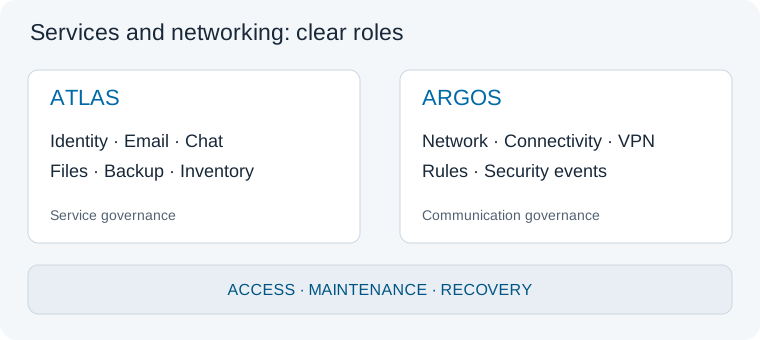
When identity, communication and networking depend on separate consoles and vendors, even a routine change means tracing access, responsibilities and constraints. Atlas and Argos organize services and networking into two clear roles, helping you decide how your infrastructure evolves.
Each new tool adds a portal, credentials, renewals and another support contact. Coordinating support and maintenance becomes harder, especially when a problem spans several services.
When an essential service depends on an external platform, switching vendors or recovering data can take time and further investment. Understanding these dependencies helps you choose what to keep in-house and what to entrust to the cloud.
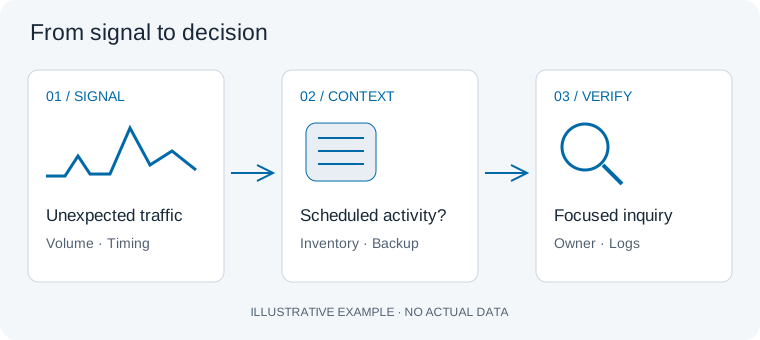
Events and information scattered across tools slow down diagnosis. You need to understand who accesses services, how the network communicates and where to investigate an outage, with clear operational responsibilities.
BUSINESS INFRASTRUCTURE01The node for your essential business services.
NETWORK & SECURITY02The control point for your network.
From your phone to your business services: the app brings together communication, personal tools and a secure network connection. Reach other authorized services through a browser or compatible clients too.
Your business identity. The services enabled for you.
Argos governs connectivity, network rules and traffic visibility. Atlas brings together identity, communication, files and deduplicated backups, with continuous mode for shared files, and can operate across IT and OT networks through multiple interfaces, including inventory and remote device maintenance. Separating these roles helps you plan changes and know where to act: adopt both or integrate the node you need into your existing infrastructure. Managing email and files internally keeps storage, access and retention under your control, without having to entrust their management to external platforms.
Explore the architecture →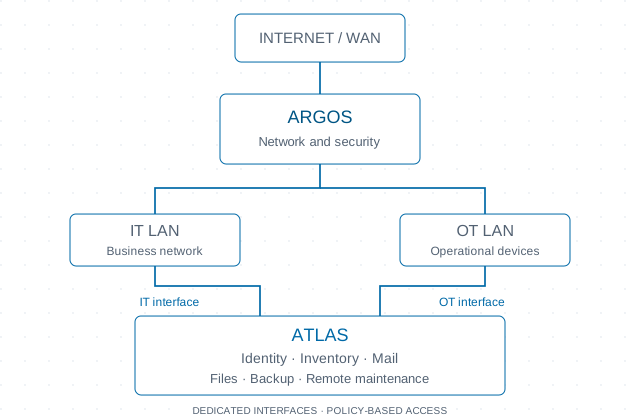
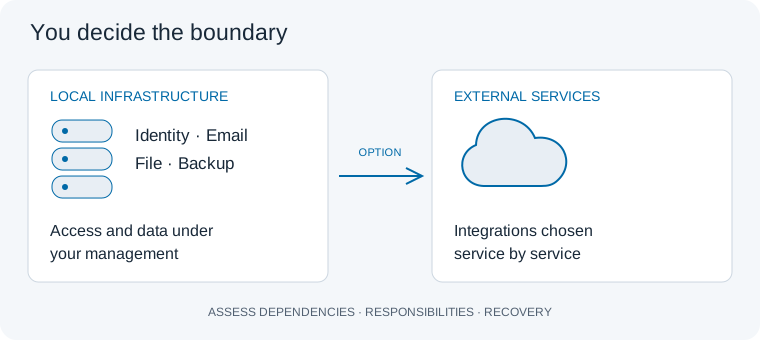
Identity, communication and data can reside in your own infrastructure. Decide where services run and how to manage access, maintenance and backup according to your organization’s needs.
Connect external services when they offer a clear benefit, considering costs, dependencies and data handling. The cloud remains a business choice while you retain control of local services and networking.
Documented protocols and interfaces help you assess connections to existing clients, networks and services. Plan a gradual adoption, checking compatibility and limitations before changing the tools people work with.
Business email and files can remain on systems you administer. Decide who can access them, where they are stored and how long they are retained, reducing reliance on external providers to manage content. Sharing and integrations remain explicit choices for your organization.
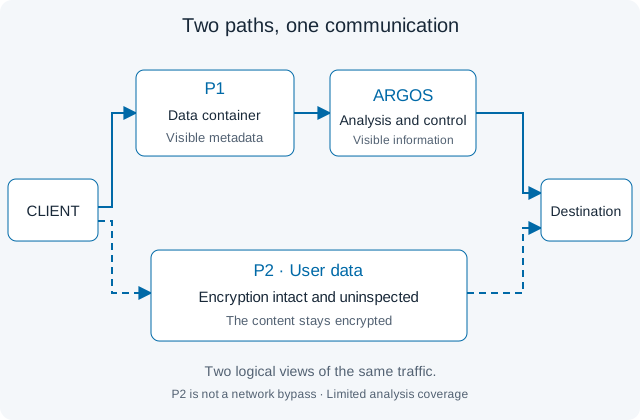
Network visibility with respect for content privacy. Argos analyzes visible connection information to detect threats and monitor traffic, without decrypting or inspecting the encrypted content of communications. User data remains protected by encryption, without TLS interception. Metadata can also contain personal information, so access and retention need careful management. Analysis coverage is limited in the documented configuration.
What can actually be observed →For environments with up to 250 workstations: bring together identity, communication and files, with clear management of networking and data recovery.
02 / SOLUTIONSeparate the business network from plants and operational devices. Define which communications to allow and observe traffic between zones.
03 / SOLUTIONConnect offices and branches while keeping network roles and rules explicit. Assess access to central services, alternative connections and local management.
04 / SOLUTIONManage all your customers’ installations from one central console, keeping access and responsibilities separate. View system status and coordinate maintenance and remote support.
See how Atlas and Argos divide responsibilities, where to place the nodes and how to connect networks and sites. Reference topologies help you compare the design with your infrastructure and identify integrations to verify.
Explore access management, network separation and visibility into encrypted communications. Understand the boundaries of security features and what to assess to protect data and services in your chosen configuration.
Review available services, documented requirements and limitations. Use this information to prepare an evaluation, check dependencies and define installation, management and recovery tasks.
Tell us about your infrastructure. Let’s start with what you actually need.
Talk to an engineer